 “And I will give you a heart of flesh.” Ezekiel 36:26 The people of God had walked away from God’s ways and word and were captive in Babylon. Depressed, oppressed and cast down; all seemed lost. They were alone, outsiders in the land of the lost and godless. Yes, they deserved the affliction and judgment. The prophet Ezekiel]]>
“And I will give you a heart of flesh.” Ezekiel 36:26
The people of God had walked away from God’s ways and word and were captive in Babylon. Depressed, oppressed and cast down; all seemed lost. They were alone, outsiders in the land of the lost and godless.
Yes, they deserved the affliction and judgment. The prophet Ezekiel laid out God’s just case against them for their response to His goodness and loving kindness. The prophet compared God’s people to that of a woman declared unclean:
“When the house of Israel dwelt in their own land, they defiled it by their own way and by their doings: their way was before me as the uncleanness of a removed woman.” (Eze 36:17)
Israel the “wife” of God was unclean and he withdrew from them and put them out of his house. Sin had broken their bond with God. God is not just a righteous God but He is also a God of mercy and grace:
“The LORD is gracious and full of compassion; slow to anger, and of great mercy. The LORD is good to all: and his tender mercies are over all his works.” (Psa 145:8-9)
God, just in His judgment of His people, also said to them:
“A new heart also will I give you, and a new spirit will I put within you: and I will take away the stony heart out of your flesh, and I will give you a heart of flesh. And I will put my spirit within you, and cause you to walk in my statutes, and ye shall keep my judgments, and do them.” (Eze 36:26-27)
The people of God had turned their hearts in to “stony hearts.” It is interesting that we can turn our hearts into “stony hearts” but only God can give you a heart of flesh. How does one turn a heart of “flesh” into a “stony heart?” We find the answer to this question with these words:
“Harden not your hearts, as in the provocation, in the day of temptation in the wilderness: When your fathers tempted me, proved me, and saw my works forty years. Wherefore I was grieved with that generation, and said, They do alway err in their heart, and they have not known my ways. So I sware in my wrath, They shall not enter into my rest. Take heed, brethren, lest there be in any of you an evil heart of unbelief, in departing from the living God.” (Heb 3:8-12)
The process of turning your heart of “flesh” into a “stony heart” is given step by step in the verse above:
1. They “tempted” and “proved” God. Tempted is understood as to scrutinize, essay or prove. People who scrutinize and seek to have God prove His rightful role as the God of creation will turn their hearts stony.
2. They, having seen the hand of God at work, reject God’s power and authority in their lives.
3. They reject God’s authority and now have a change of heart of who and what God means to them.
4. They establish a life of “err” or sin in their “heart” or their spirit.
5. They now have an “evil heart of unbelief” and “depart” from God’s word and authority.
How is your heart? Is it on the “stony” side of hardness? Do you see your life somewhere on the slippery slide of slipping away from God’s word? If so, I have some good news for you! You can have a new heart with just one prayer.
The scripture makes this truth clear:
“If we confess our sins, he is faithful and just to forgive us our sins” (1 Jn 1:9)
Just as God promised the Children of Israel that He would restore their righteousness:
“I will put my spirit within you, and cause you to walk in my statutes, and ye shall keep my judgments, and do them.” God makes this promise to you, “to cleanse us from all unrighteousness.” (1 Jn 1:9)
Today you can have your hardening heart softened, your sins forgiven and your righteousness restored if you, in faith, will call out for forgiveness in the name of Jesus.
]]>

 The hope of the resurrection is not a new concept that begins with Christianity but is as old as the sentence of death that came at the first sin and sinners in the Garden. The scripture states: “Forasmuch as ye know that ye were not redeemed with corruptible things, as silver and gold, from your vain]]>
The hope of the resurrection is not a new concept that begins with Christianity but is as old as the sentence of death that came at the first sin and sinners in the Garden. The scripture states:
“Forasmuch as ye know that ye were not redeemed with corruptible things, as silver and gold, from your vain conversation received by tradition from your fathers; But with the precious blood of Christ, as of a lamb without blemish and without spot: Who verily was foreordained before the foundation of the world, but was manifest in these last times for you.” (1 Pe 1:18-20)
The Apostle Paul declares, “But now is Christ risen from the dead, and become the firstfruits of them that slept.” (1 Co 15:20) and now expands his teaching on the resurrection with his words to the believers in Rome, “For we know that the whole creation groaneth and travaileth in pain together until now. And not only they but ourselves also, which have the firstfruits of the Spirit, even we ourselves groan within ourselves, waiting for the adoption, to wit, the redemption of our body.” (Rom 8:22-23)
The firstfruit offering was established as a remembrance of Israel’s slavery in Egypt and to remember how God delivered them from slavery. In this offering there also was a remembrance of God’s promise of “a land that floweth with milk and honey” being fulfilled.
The Apostle Paul used this Jewish holy day as a springboard to teach about the resurrection of the dead. The hope of the resurrection was a hope of the people of God from the sting of sin and death when he said:
"And not only they, but ourselves also, which have the firstfruits of the Spirit, even we ourselves groan within ourselves, waiting for the adoption, to wit, the redemption of our body.” (Rom 8:23)
The Apostle Paul declares, “But now is Christ risen from the dead, and become the firstfruits of them that slept,” (1 Co 15:20) and now expands his teaching on the resurrection with his words to the believers in Rome, “For we know that the whole creation groaneth and travaileth in pain together until now. And not only they but ourselves also, which have the firstfruits of the Spirit, even we ourselves groan within ourselves, waiting for the adoption, to wit, the redemption of our body,” (Rom 8:22-23) he was reaffirming the truth of the resurrection as embedded in the Old Testament.
The firstfruit offering was established as a remembrance of Israel’s slavery in Egypt and to remember the how God delivered them from slavery. In this offering also was a remembrance of God’s promise of “a land that floweth with milk and honey” being fulfilled.
The book of Job is believed to be the earliest writing in the Bible that makes this clear. Job believed in the salvation that would be had in Jesus and his resurrection from the dead with these words:
“For I know that my redeemer liveth, and that he shall stand at the latter day upon the earth.” (Job 19:25)
David, King of Israel, believed in the resurrection of the dead when he spoke these words about his child who died as a result of his sinful relationship with Bathsheba. He said “But now he is dead, wherefore should I fast? Can I bring him back again? I shall go to him, but he shall not return to me.” (2 Sa 12:23)
Lazarus’ sisters, Mary and Martha, belief in the resurrection is made clear in their conversation with Jesus about their brother's death. Martha said:
“I know, that even now, whatsoever thou wilt ask of God, God will give it thee. Jesus saith unto her, Thy brother shall rise again.” (John 11:22-23), “Martha saith unto him, I know that he shall rise again in the resurrection at the last day.” (John 11:24)
Jesus was the “first fruit” of the resurrection and at His death, the word of God reveals, “the graves were opened, and many bodies of the saints which slept arose, And came out of the graves after his resurrection, and went into the holy city, and appeared unto many.” (Mat 27:52-53)
You have hope. Not just in this life but for all eternity. Jesus said, “Let not your heart be troubled: ye believe in God, believe also in me. In my Father's house are many mansions: if it were not so, I would have told you. I go to prepare a place for you. And if I go and prepare a place for you, I will come again, and receive you unto myself; that where I am, there ye may be also.” (John 14:1-3)
God loves you and you have His promise to raise you from the dead to be with Him forever!
]]>
 “This sickness is not unto death.” John 11:4 Not everything is as it appears. People are born destined to die. The question is not the beginning and the end of human life, the question is what happens in the time-space in between. Sickness, struggles, and difficulties are a part of our life journey and how we view these events will]]>
“This sickness is not unto death.” John 11:4
Not everything is as it appears. People are born destined to die. The question is not the beginning and the end of human life, the question is what happens in the time-space in between. Sickness, struggles, and difficulties are a part of our life journey and how we view these events will determine our understanding of not only others and ourselves but also our understanding of God.
Jesus, like most in the human experience, developed deep relationships. Outside Jesus’ twelve (of whom eleven were to become the Apostles that Paul said were, “pillars” (Gal 2:9) of the Lord’s Church) Mary, Martha and their brother Lazarus seems to be His closest relationships.
Lazarus, in the space between birth and death, was sick and his sisters sent for their friend, Jesus, to help. The One who has the power over not just life and death but the time-space in between. Jesus, upon receiving their messenger with a request to come and help, said to them:
“When Jesus heard that, he said, This sickness is not unto death, but for the glory of God, that the Son of God might be glorified thereby.” (John 11:4)
Most of the people who are reading this already know that Jesus lingers in His journey to grant the request of the sisters of Lazarus and he dies and when Jesus came to the family in the morning the scripture records that Jesus stood outside Lazarus' place of burial:
“When Jesus, therefore, saw her weeping, and the Jews also weeping which came with her, he groaned in the spirit, and was troubled.” (John 11:33)
Jesus wept not for Lazarus. He knew in just a few minutes Lazarus would sit with Him and rejoice over the work God had done in his life. Jesus wept for the pain of Mary and Martha as they experienced the time-space that exists between life and death. Jesus’ grief was not for the dead but the living.
The power you hold to be an overcomer and have joy in the time you dwell on this earth is found in Jesus' words to his disciples:
“This sickness is not unto death, but for the glory of God, that the Son of God might be glorified thereby.” (John 11:4)
Our life’s purpose as followers of Jesus is to bring glory to the Son of God. In sickness or in good health, in suffering or in joy, in birth and death, your single purpose is to bring glory to the Son of God.
You, like the sisters of Lazarus, often do not understand what God is doing in your times of difficulty but you can rest assured that God’s love for you will give you strength. The Apostle Paul makes this observation about difficulties in the space between birth and death:
“And he said unto me, My grace is sufficient for thee: for my strength is made perfect in weakness. Most gladly, therefore, will I rather glory in my infirmities, that the power of Christ may rest upon me.” (2 Co 12:9)
If you are living through a difficult time in your life, look for Jesus for your power and strength and “glory in (your) infirmities.” When the “power of Christ” is in your life you will bring not only victory in your life but will bring glory to the Son of God.
A promise to you in your time of need is offered by the Wiseman Solomon:
“Trust in the LORD with all thine heart; and lean not unto thine own understanding. In all thy ways acknowledge him, and he shall direct thy paths." (Pro 3:5-6)
]]>
 “The voice of weeping shall be no more heard.” Isaiah 65:19 Heaven, what a pleasant subject for the “Redeemed in the Lord” to contemplate and to place our thoughts. Many sermons have been preached and volumes of books that could fill the Roman Coliseum about the very pleasant subject of Heaven. Isaiah, speaking for God and talking]]>
“The voice of weeping shall be no more heard.” Isaiah 65:19
Heaven, what a pleasant subject for the “Redeemed in the Lord” to contemplate and to place our thoughts. Many sermons have been preached and volumes of books that could fill the Roman Coliseum about the very pleasant subject of Heaven.
Isaiah, speaking for God and talking of Heaven, said:
“And I will rejoice in Jerusalem, and joy in my people: and the voice of weeping shall be no more heard in her, nor the voice of crying.” (Isa 65:19)
Of all the wonder of Heaven the most astounding thought of “the voice of weeping shall no more (be) heard,” defines the wonder of God’s Heaven.
Imagine never having a sharp word spoken to you or from you that brings the weeping from a broken relationship. A place where no mother will hold the lifeless body of a child, a place where weeping is never heard from a widow or widower who has lost her husband or his wife.
Think about a place were no child weeps in their bed because they are abused, abandoned or hungry. A place where the poor never weep because of their need, the wealth of this world paving its streets and no weeping for the darkness of sin that has clouded your life.
This world is full of weeping, brokenness and pain. In God’s Heaven, all the damage that sin has inflicted in our lives will be removed and just as God is able to forget our sin and cast it; so shall we do the same as it is said, “As far as the east is from the west.” (Psa 103:12) We will never have the thoughts of failure, the feeling of defeat or the darkness of guilt from our past sin.
In God’s Heaven, we will never be tempted with or desire to sin. The Revelator John said about Heaven:
“And there shall in no wise enter into it any thing that defileth, neither whatsoever worketh abomination, or maketh a lie: but they which are written in the Lamb's book of life.” (Rev 21:27)
Let this thought dwell deep into your soul. Not one thing that is evil, dark, defiling, not anything that could be construed as evil enters in Heaven. Not one person or entity that is not of God can enter into Heaven. It is by invitation. The list that allows entrance is the names found on the “Lamb’s book of life.”
Are you, my friend, bound for Heaven? Is your name on the list that controls who enters Heaven? If not, let me share this good news with you. Jesus came to the Earth, born as a baby that was both man and God and would become a mediator between you and God.
Jesus lived a life that was free from sin. God’s word states:
“For we have not an high priest which cannot be touched with the feeling of our infirmities; but was in all points tempted like as we are, yet without sin.” (Heb 4:15)
Jesus died, not for His sin, but your sin. The Word of God declares, “Christ died for our sins according to the scriptures.” (1 Co 15:3) The death of Jesus, the only perfect human born on this Earth, gave His life so that you may have a place in Heaven reserved for you.
Jesus not only died, but in His death He conquered both sin and death. This truth is found in these words:
“O death, where is thy sting? O grave, where is thy victory? The sting of death is sin; and the strength of sin is the law. But thanks be to God, which giveth us the victory through our Lord Jesus Christ.” (1 Co 15:55-57)
In Jesus’ death, burial and resurrection not only was sin’s power broken in the life of Jesus sin’s, but power was also removed from anyone who will call on His name. The scriptures gives hope to you with these words “For whosoever shall call upon the name of the Lord shall be saved.” (Rom 10:13)
Will you call on the name of Jesus and receive forgiveness of your sin? To abide in Heaven with a holy God you must rid yourself of the power of sin. Call on Jesus today and you will be received into the dwelling place of God.
]]>
 “That Christ may dwell in your hearts by faith.” Ephesians 3:17 The power of faith is not to be underestimated. The power of faith is a gift from God Himself. The scripture states: “For I say, through the grace given unto me, to every man that is among you, not to think of himself more]]>
“That Christ may dwell in your hearts by faith.” Ephesians 3:17
The power of faith is not to be underestimated. The power of faith is a gift from God Himself. The scripture states:
“For I say, through the grace given unto me, to every man that is among you, not to think of himself more highly than he ought to think; but to think soberly, according as God hath dealt to every man the measure of faith.” (Rom 12:3)
Many people feel inferior in their Christian life thinking that they do not have the ability of other followers of Jesus to live in faith. The good news is that God is the One who bestows the “measure” of faith each one of His children receives.
Your faith is grown not by “exercising” your faith, but rather your faith is grown when you seek God in His word. The scripture gives us this understanding about the way we increase our faith, “So then faith cometh by hearing, and hearing by the word of God.” (Rom 10:17)
If you are struggling in your life and are seeking to have the faith to follow God’s will and purpose in your life, read God’s word! The power to live a life of faith is simple. Read the word of God and your faith will “cometh by hearing” God’s word.
The power of faith is how you are able to please God, “But without faith it is impossible to please him.” (Heb 11:6) When we, by faith, reach out to God, He is pleased but there is one more condition to pleasing God when you approach Him. You must, “believe that He is, and that He is a rewarder of them that diligently seek him.” (Heb 11:6)
The rewards of God are reserved for the ones who will not only seek Him but also have faith that He is able to fulfill “all your need according to his riches in glory by Christ Jesus.” (Php 4:19) We are not to have “faith” in our self and our abilities but we are to have faith in God’s ability because of our relationship with Jesus.
Faith is not only “measured” to us by God and increased by hearing God’s word; faith is depleted when we doubt God’s power. Jesus said to Peter, when He lifted him from the stormy waters after Peter, “saw the wind boisterous, he was afraid,“ and cried, saying, Lord, save me. "O thou of little faith, wherefore didst thou doubt?” (Mat 14:30-31)
Peter indeed had the faith to step out on the stormy sea but his fear caused his faith to diminish. Faced with the fear of the situation that his faith had led him into, Peter lost the power to “walk in faith” on the water.
We are in good company when we find our faith failing and just as Jesus was there and “stretched forth his hand” to Peter in his time of faithless fear, Jesus will reach out and lift you from your “failing faith.” Just as a parent helps a child take the first steps in their attempt to walk; God helps you as you stumble in your faith walk.
We have this promise from God, “I will never leave thee, nor forsake thee.” (Heb 13:5) The Apostle Paul makes this observation about God’s enduring nature:
“For I am persuaded, that neither death, nor life, nor angels, nor principalities, nor powers, nor things present, nor things to come, Nor height, nor depth, nor any other creature, shall be able to separate us from the love of God, which is in Christ Jesus our Lord.” (Rom 8:38-39)
Go ahead; step in faith out of your “boat” of comfort and into faith if Jesus calls you. If you find yourself “sinking” in the waters of your walk with Jesus; He will surely lift you out of your troubles and deliver you to the place He is leading you to go.
]]>
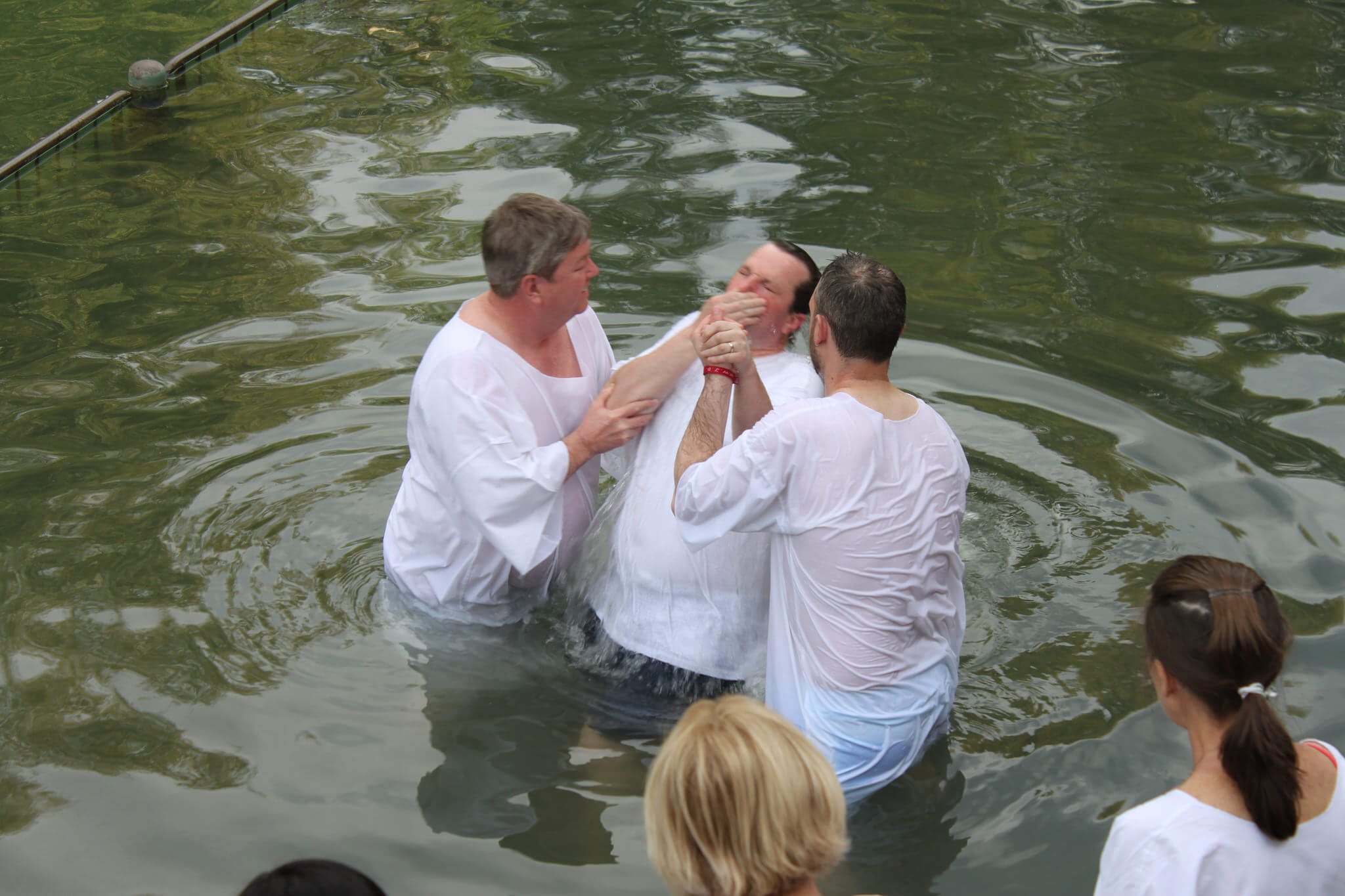 “If thou believest with all thine heart, thou mayest.” Acts 8:37 The power of the gospel of Jesus is not limited to just changing your eternal destination. As the gospel was explained to the eunuch from Ethiopia, he understood there would be changes in his life that would be not only spiritual but physical as]]>
“If thou believest with all thine heart, thou mayest.” Acts 8:37
The power of the gospel of Jesus is not limited to just changing your eternal destination. As the gospel was explained to the eunuch from Ethiopia, he understood there would be changes in his life that would be not only spiritual but physical as well.
As the conversation between the two men about Jesus was coming to a close, the subject of baptism obviously was a topic of discussion that was included in the proclamation of the work of grace Philip presented to this man.
The man from Ethiopia, seeing a pool of water, asked a question of Philip:
“See, here is water; what doth hinder me to be baptized?” (Act 8:36)
Philip, to be sure that this man had a complete understanding of the gospel, said:
“If thou believest with all thine heart, thou mayest. And he answered and said, I believe that Jesus Christ is the Son of God.” (Act 8:37)
This encounter with the gospel changed this man’s eternal destination and his remaining years he would walk on this earth. Baptism is the first defined act of obedience a follower of Jesus is instructed to do after they, “thou believest with all thine heart.” The baptizing of babies and children who are not able to “believest with all thine heart” is at best a religious act that does not have spiritual implications.
The man from Ethiopia responded to the Gospel of Jesus and not only consented to but requested baptism. Different religious groups will place different degrees of importance on baptism and who can administer and how and where it must take place.
A simple biblical observation of this encounter makes the understanding of baptism clear. When you hear the Gospel of Jesus and you accept the saving grace that Jesus’s death had made available to you, now you are able to understand and desire to celebrate your new found “Friend and Saviour" in the physical world as well as the spiritual world.
To be baptized as a follower of the gospel is one of the greatest experiences a follower of Jesus can have. It is not only an act of obedience to Jesus but is a public display of the spiritual journey you are taking in this world.
Baptism has become a religious “football” and it depends on what team you are on to show how important and what purpose baptism holds in the life of a believer. Some religious groups do not practice baptism; forming their opinions based on their religious dogma and yet others will proclaim the forgiveness of sin is achieved by the baptismal waters.
Baptism is not a religious activity that is dictated by a single denomination or church group. Baptism is an act of obedience every born-again follower of Jesus should desire to experience. The purpose of baptism, like most biblical doctrines, has been redefined by many church groups to be tailored to fit their religious views.
Friend, don’t get caught in the trap of religious debate. If you were baptized as a baby or a young child, before you were able to “believest with all thine heart,” you have not experienced the baptism of a believer but a religious activity created by human logic.
If you are born-again, be like the man from Ethiopia and ask yourself this question, “What doth hinder me to be baptized?”
]]>
 “The people, when they beheld him, were greatly amazed, and running to him saluted him.” Mark 9:15 Amazing! Jesus is amazing if you know Him and the power of His resurrection. Throughout history, Jesus has been known as a healer, a friend and a brother, but to those who know Him as the Saviour, He is amazing! The]]>
“The people, when they beheld him, were greatly amazed, and running to him saluted him.” Mark 9:15
Amazing! Jesus is amazing if you know Him and the power of His resurrection. Throughout history, Jesus has been known as a healer, a friend and a brother, but to those who know Him as the Saviour, He is amazing!
The power of Jesus to turn the lives of the defeated into the victors, the ones who mourn into the ones who rejoice, to move the defeated into the conquerers is only available to the people who know Him as the Saviour.
When the people saw Jesus and His works they were “greatly amazed” not because they knew Jesus as the Saviour of the world but because they saw Him as a miracle worker and awaited some miracle that He would perform. Jesus is not looking for “thrill seekers" to follow Him but people who are looking for the Saviour.
After feeding the thousands with a few fishes and loaves of bread, the crowds followed Jesus and His response to this mass of people was:
“I say unto you, Ye seek me, not because ye saw the miracles, but because ye did eat of the loaves, and were filled.” (John 6:26)
To be amazed at what Jesus can do is not the same as living a life that is amazed at what Jesus has done. Many people seek Jesus for the “bread and fishes” and not for the purpose that Jesus came into the world.
Jesus indeed is the great healer but if He heals your physical body and you are spiritually dead, you will probably be amazed by what He has done but you will still face the judgment of your sin. Jesus did not come to feed the hungry, although He did, nor did He come to heal the sick and the sick Jesus did heal. Jesus did not come to lift up the broken hearted and indeed He did. Jesus came, “to seek and to save that which was lost." (Luke 19:10)
What a difference Jesus can make. The lame walked, the deaf heard, the blind did see and the dead were called from the grave. All of these fade in the shadow of the salvation of the lost. Jesus did not come to make the physical life of people better but Jesus came to save the lost from the wages of sin. The word of God is clear on the matter of sin, “For the wages of sin is death.” (Rom 6:23)
If Jesus only came as a “good teacher” or as “the great healer” His life would have been wasted on the least important aspect of human loss. When death visits us; we know it is final. Death is our enemy that we cannot wage a battle against and be victors.
The Apostle Paul makes this observation about the power of Jesus over death:
“O death, where is thy sting? O grave, where is thy victory? The sting of death is sin; and the strength of sin is the law. But thanks be to God, which giveth us the victory through our Lord Jesus Christ.” (1 Co 15:55-57)
Only Jesus has the power to remove the “sting of death” only Jesus holds the power to “giveth us the victory” over our greatest of all enemies, death.
Are you looking for God to help your physical needs? Are you calling out on God for His “bread and fishes?” Jesus is willing and able to meet all your needs but Jesus wants to be your Saviour. Deliverance from hunger, pain and physical death are often the most called out needs we make to God but what we most need is a Saviour.
The angel's proclamation when announcing the birth of Jesus was, “For unto you is born this day in the city of David a Saviour, which is Christ the Lord.” (Luke 2:11) Not one who would heal, feed or prolong physical death but a Saviour!
Jesus came that you may have life. Jesus said He came that you would have, “life and that they might have it more abundantly.” (John 10:10)
Jesus can heal you of your physical infirmities. Yes, Jesus can provide you with your daily needs but Jesus came to be your Saviour. Are you following Jesus because you are amazed at what He can do or are you following Him because He is your Saviour?
Remember everyone left Jesus who was amazed at His miracles but only the ones who knew Him as Saviour were with Jesus to the end. When Jesus challenged the ones who were amazed; they all left Him. When Jesus asked the followers who knew Him as their Saviour if they would leave Him they said, “Lord, to whom shall we go? thou hast the words of eternal life.” (John 6:68)
How about you? Are you following Jesus for the “bread and fishes” or are you following Jesus because He is your Saviour?
]]>
 “On mine arm shall they trust.” Isaiah 51:5 The hope of salvation rests on these words, “On mine arm shall they trust.” The words of the Prophet makes this truth relevant to all who will hear what the truth about the nature of God is. God is not far away waiting for the judgment of His]]>
“On mine arm shall they trust.” Isaiah 51:5
The hope of salvation rests on these words, “On mine arm shall they trust.” The words of the Prophet makes this truth relevant to all who will hear what the truth about the nature of God is. God is not far away waiting for the judgment of His creation to take place but rather He seeks out anyone who will respond to His love.
Why must you respond to God’s righteousness to be near Him? Our sinfulness is a chasm that separates us from God. The scripture states, “God is angry with the wicked every day.” (Psa 7:11) This seems to contradict the “God is love” understanding many hold as their ideology about God and His salvation.
God is love but He is righteous as well and cannot join Himself to sin or those who sin. The Prophet, speaking God’s words said, “My salvation is gone forth.” To be near to God you must experience His “salvation” to therefore close the chasm that sin has placed between you and God.
We are warned by this same Prophet we must “call upon him in truth.” The question arises, how do we call on God in truth? The scripture offers us this understanding of what the truth is that we must have to approach God. There is only one “truth” and Jesus makes this declaration:
“I am the way, the truth, and the life: no man cometh unto the Father, but by me.” (John 14:6)
Jesus is the truth and you must respond to His truth if you are to be near to God and experience His offer of salvation. To experience salvation you must respond to His righteousness that He reveals to you by seeking Him in the “truth” of Jesus.
The bible is clear on this issue:
“Neither is there salvation in any other: for there is none other name under heaven given among men, whereby we must be saved.”(Act 4:12)
If you are to be close to God you must close the chasm of sin by the work of the Savior.
When you see God’s righteousness, you see your sinfulness and understand your need to seek Him in the truth of the Gospel of Jesus. Jesus is how God’s “salvation is gone forth” and there is no other way to be near to God outside trusting in the Saviour.
God has made a way for the forgiveness of sin and to end the separation that it has created between Him and His creation. The plan of God from the beginning of the world was the birth, death and resurrection of Jesus for the final solution of sin. This truth is revealed in this passage of scripture:
“Forasmuch as ye know that ye were not redeemed with corruptible things, as silver and gold, from your vain conversation received by tradition from your fathers; But with the precious blood of Christ, as of a lamb without blemish and without spot: Who verily was foreordained before the foundation of the world, but was manifest in these last times for you, Who by him do believe in God, that raised him up from the dead, and gave him glory; that your faith and hope might be in God.” (1 Peter 1:18-21)
Have you called on the name of Jesus in truth? Are you struggling in your walk with God; trying to please Him with your own righteousness? Today, if you will, “Seek ye the LORD while he may be found, call ye upon him while he is near,”(Isa 55:6) you will know the salvation of God in Jesus the Christ.
]]>
 “Trust in him at all times.” Psalm 62:8 A childlike faith. What a way to live your life. A child that is blessed to be born into a loving home lives a life of faith. Faith and trust in the family that cares for their welfare, provide for every need and loves unconditionally. Living in]]>
“Trust in him at all times.” Psalm 62:8
A childlike faith. What a way to live your life. A child that is blessed to be born into a loving home lives a life of faith. Faith and trust in the family that cares for their welfare, provide for every need and loves unconditionally.
Living in a childlike faith provides for a care-free life. This child never worries about what to wear, what and when to eat or worries about safety and security. Life, if it develops normally, will disrupt this childlike faith with the awareness of the fallibility in the adults that care for them.
A child moves from total faith and dependence on their parents and other adults in their lives to questioning and doubt. This is not a bad thing, indeed humans are fallible and often prove themselves as untrustworthy of the faith that the child places in them.
David, King of Israel, had lived a life of faith in God before he made the declaration, “Trust in him at all times.”
David had discovered this about God:
"He only is my rock and my salvation: he is my defence; I shall not be moved.” (Psa 62:6)
David had lived a life of faith that allowed him to discover that God was his “rock” shade from the sun, defense from his enemies, a place that he could hide in times of trouble and would always be found. This rock of David was present in the lives of the people of God when they were in need as they wondered in the desert.
The scripture records:
“Behold, I will stand before thee there upon the rock in Horeb; and thou shalt smite the rock, and there shall come water out of it, that the people may drink. And Moses did so in the sight of the elders of Israel.” (Exo 17:6)
This rock also is here for you today. The Apostle Paul makes this clear with these words:
“And did all drink the same spiritual drink: for they drank of that spiritual Rock that followed them: and that Rock was Christ.” (1 Co 10:4)
Jesus was the rock in the wilderness, the rock of David and now your rock if you will trust in Him. This trust in the rock comes with living a life of faith, Jesus said, “Except ye be converted, and become as little children, ye shall not enter into the kingdom of heaven.” (Mat 18:3)
The word converted is rendered strengthened or to turn around. To enter into God’s kingdom Jesus said, you must first be strengthened by turning around and trusting God as a child in a childlike faith. This kind of faith is a saving faith.
David said his “Rock” was his salvation and because of this salvation David was secure and stable. His words, "I shall not be moved” was his testimony of God’s power not only to save but to keep the ones who trust in Him.
This kind of confidence does not come to the people who live a life of doubt, fear and without faith. David was stable because he trusted God. His faith made God his rock, defense and salvation.
When you live your life without faith in God you will not be stable. God’s word makes this observation:
“…ask in faith, nothing wavering. For he that wavereth is like a wave of the sea driven with the wind and tossed. For let not that man think that he shall receive any thing of the Lord. A double minded man is unstable in all his ways.” (Jas 1:6-8)
Are you unstable? Are you living a life of faith that is not “childlike”? Find your rock, trust your rock and you will live a life in God’s favor as you make your journey to the Father's House.
]]>
 The old idiom “going against the grain" is older than the writings of Shakespeare and, according to some folks, is derived from the world of carpentry referring to the best practice of working wood in the direction of the lines of grain. The practical application of this idiom is that if an idea or action goes against the grain; it]]>
The old idiom “going against the grain" is older than the writings of Shakespeare and, according to some folks, is derived from the world of carpentry referring to the best practice of working wood in the direction of the lines of grain. The practical application of this idiom is that if an idea or action goes against the grain; it is the opposite of what you feel is right or normal and you find it difficult to accept.
The Christian lifestyle often “goes against the grain” of society and the followers of Jesus feel uncomfortable living out their faith outside of their groups they normally associate with. If we, as believers, are to be successful in our fellowship with the Saviour we must “go against the grain” of the world we are pilgrimaging through. We are reminded in the word of God that we are not citizens of this world but citizens of the kingdom of God. The Apostle Peter makes this clear with these words:
“…ye are a chosen generation, a royal priesthood, an holy nation, a peculiar people; that ye should shew forth the praises of him who hath called you out of darkness into his marvellous light.” (1 Pe 2:9)
Different is good. When followers of Jesus live a life that is differentiated from the rest of the inhabitants of this world by our thoughts, actions and purpose; we will feel the “grain” of this world against us. The wiseman Solomon, in a series of “one-liners”, observes the power of going against the grains of society in his musings found in the book of Ecclesiastes.
Solomon makes this observation:
“I have seen servants upon horses, and princes walking as servants upon the earth.” (Ecc 10:7)
This observation would be considered an oxymoron and out of the mainstream of cultural acceptance.
People of faith indeed “go against the grain” of society. Here is a sampling of Jesus’ words that is an enigma to society:
“Bless them that curse you, and pray for them which despitefully use you.” (Luke 6:28)
“But I say unto you, That ye resist not evil: but whosoever shall smite thee on thy right cheek, turn to him the other also. And if any man will sue thee at the law, and take away thy coat, let him have thy cloke also.” (Mat 5:39-40)
“But he that is greatest among you shall be your servant.” (Mat 23:11)
The princes that Solomon saw walking were imprinted to his memory for life. Solomon had seen thousands of princes in his life but it was the ones that he saw walking while their servants rode horses that left a lasting impression.
This enigma of protocol made Solomon to not only recall this “going against the grain” of society but question why this choice was made by the prince. When you are following the teachings of Jesus and people see you “walking” when they are “upon horses” they too will take notice of your lifestyle.
A prayer in public before you eat, a kind word when harsh words are spoken, forgiveness when offenses are made against you, compassion that is unwarranted, love that is given when it is rejected; all are confusing to the lost and undone.
How about you? Are you an enigma to society? Are you going against the grain of the evil in this world? Are you living a lifestyle that is driven by the word of God and the world observes as strange or weird? The Apostle Peter speaking to how the world should view our lifestyle choices said:
“Wherein they think it strange that ye run not with them to the same excess of riot, speaking evil of you.” (1 Pe 4:4)
Jesus gives us this warning, “Woe unto you, when all men shall speak well of you!” (Luke 6:26) To have the blessing of God’s favor is far better than the praises of men. You will have enemies if you live your life for Jesus in full view of the lost and undone in this world but that fades into the joy of living a life in the favor of God.
The power of personal choice is demonstrated in these words:
“And if it seem evil unto you to serve the LORD, choose you this day whom ye will serve; whether the gods which your fathers served that were on the other side of the flood, or the gods of the Amorites, in whose land ye dwell: but as for me and my house, we will serve the LORD.” (Jos 24:15)
Will you choose to be a “servant walking”? One that will bring the attention of the world to God’s saving grace that you received or will you just ride the same horse as the rest of the world? The choice is yours. Be like Joshua and say, “…but as for me and my house, we will serve the LORD.”
]]>